Lord Virgil
The Vampire Prince’s BrideLord Virgil is a vampire noble whose political importance is established through the taxes he controls and the military danger surrounding their delivery. He insists on sending those taxes in gold each year, claiming that the traditional form of payment is safer. In practice, that attachment to an older system exposes him: the gold becomes a portable prize, and his habits make his movements predictable to Rebeluna’s shifter forces.
Identity and Position
Lord Virgil appears as a member of the vampire ruling order whose estates and tax convoy are important enough to receive military assistance from the king. The evidence does not provide a full biography, but it defines him through rank, wealth, and administrative responsibility. His annual tax delivery is not a private transaction; it connects his estates to the finances of the vampire kingdom and makes him a visible representative of royal authority.
His preference for gold also marks him as resistant to change. Cleo observes that he still insists on delivering the taxes in gold, while Darius describes him as being so stuck in the past that he becomes an easy target. The contrast between gold and newer forms of payment, such as a check or electronic transfer, gives Virgil a practical vulnerability as well as a symbolic one. His conservatism is not merely a personal eccentricity: it creates the conditions under which insurgents can predict, intercept, and exploit his movements.
The Attack on the Tax Envoy
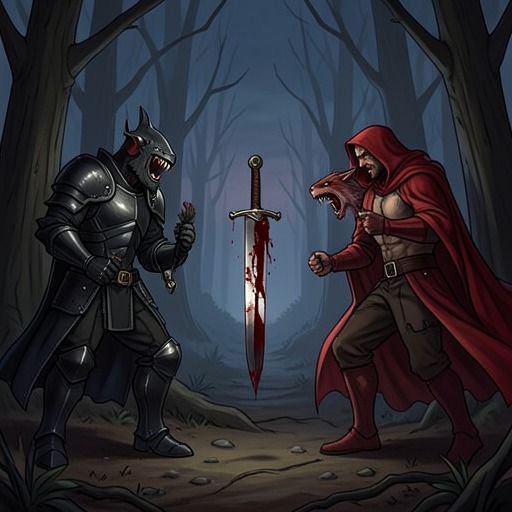
Rebeluna-associated shifters attacked a small vampire envoy carrying Lord Virgil’s taxes one evening. The attackers used a staged roadblock, then shot the tires of Virgil’s Hummer and seized the gold. They did not remain to kill anyone, making the operation a focused theft rather than a massacre. The choice of target and method suggests an attempt to obtain funding while avoiding the costs and attention of unnecessary casualties.
The raid immediately raises the possibility that Rebeluna is gathering money for a larger-scale attack. Gordon interprets the theft as more than an isolated robbery, and the gold’s removal turns Virgil’s administrative practice into a resource for the insurgency. The attack therefore shifts the meaning of his taxes: what he regards as secure royal revenue becomes financing potentially available to his enemies.
Estates, Distraction, and Strategic Failure
The assault on the envoy is followed by a full-scale attack on Lord Virgil’s estates. The king sends troops to assist him, creating the opening through which a cheetah shifter enters the palace and assassinates Camlo, the king’s heir. The estates attack thus functions as a military diversion even though the available evidence leaves the exact chain of command uncertain. Darius suspects that Rebeluna may be responsible, and he concludes that the concentrated assault on Virgil was clearly capable of drawing royal forces away from the palace.
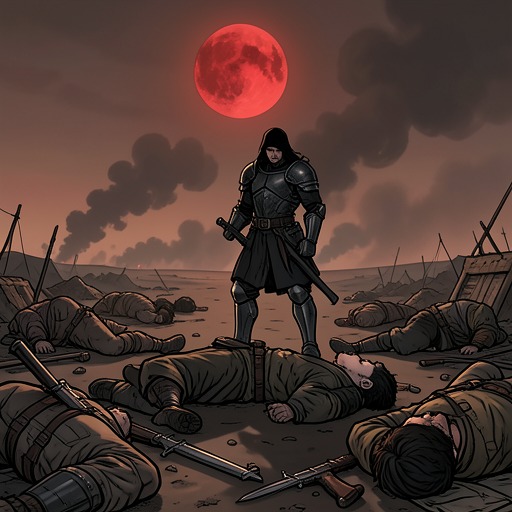
Virgil’s conduct during the estate attack is presented as a humiliating failure. According to Gordon, Virgil turned and ran away with his tail between his legs and took no prisoners. Gordon expects him to be relieved of his position, questioning how someone who behaved in that manner could call himself a vampire. Whether or not every detail of the attack can be attributed directly to Rebeluna, Virgil’s retreat has political consequences: his authority is weakened, his office is endangered, and his estates become associated with the loss of the king’s heir.
Consequences for the Wider Conflict
Lord Virgil’s vulnerability affects Darius directly. Darius is responsible for suppressing the Rebeluna rebellion, and Camlo’s assassination makes the failure to anticipate the attack a threat to Darius’s career. He recognizes that proving the rebels were not involved would not be enough; he must assume that they were directly responsible or at least knew of the plot and must intensify his campaign against them. Virgil’s attacked estates therefore become part of the chain that links insurgent financing, royal distraction, the death of the heir, and Darius’s need to act.
Virgil also becomes an example of how the vampire kingdom’s established order can be exploited from within its own routines. His gold shipments advertise wealth, his traditional methods create predictability, and his failure to defend his estates exposes the weakness beneath his noble status. The character is not developed through private confession or an extended personal arc. Instead, he is defined by the institutional consequences of his choices: an old-fashioned security practice invites theft, a military crisis reveals inadequate leadership, and the resulting disgrace strengthens the pressure for a harsher campaign against Rebeluna.
Narrative Significance
Lord Virgil occupies the position of a compromised noble authority rather than a heroic defender. His attachment to gold contrasts with the rapidly changing tactics of the shifters, whose staged roadblock and targeted attack turn tradition into an exploitable liability. His retreat further inverts the expected image of aristocratic vampire power: the noble who should embody control becomes the person whose weakness helps create a larger catastrophe.
At the same time, the narrative keeps his precise relationship to Rebeluna unresolved. The evidence establishes that shifters attack his envoy and estates, but Darius still has to determine whether Rebeluna planned the palace assassination or used the estate assault as part of a coordinated operation. That uncertainty gives Virgil’s character a strategic function beyond personal disgrace. His taxes and estates sit at the point where economic extraction, military defense, royal succession, and insurgent warfare converge, making his failure one of the early signs that the vampire kingdom’s inherited structures can no longer guarantee safety.